
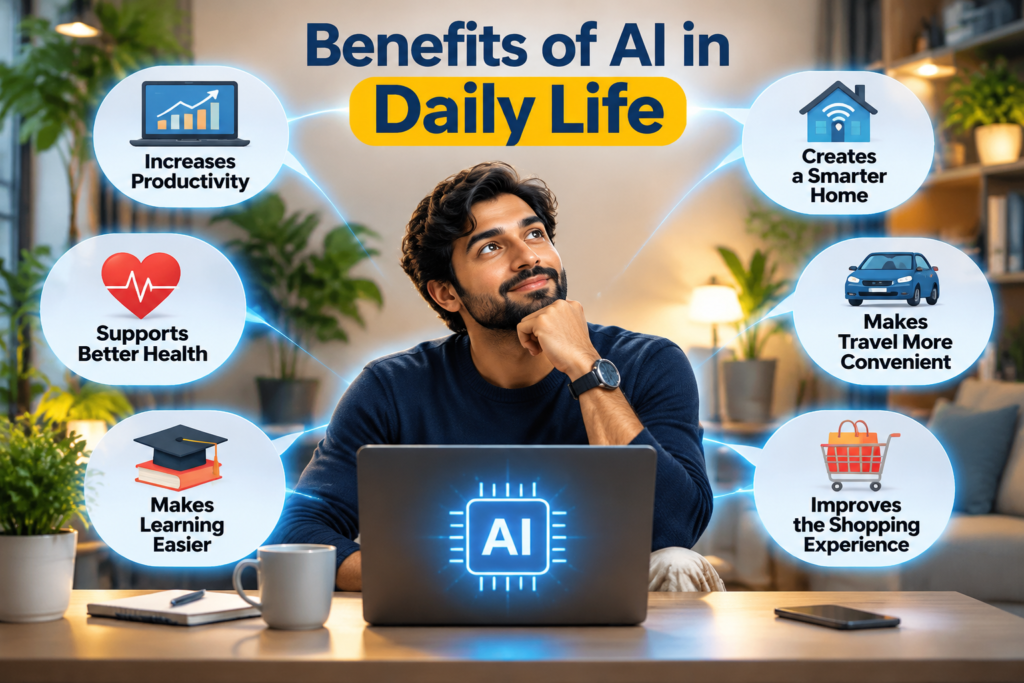
Artificial Intelligence (AI) has become an important part of everyday life, helping people complete routine activities more easily and efficiently. From smartphones and online shopping to navigation applications and digital assistants, AI-powered technology is changing how people communicate, learn, work, and manage their daily responsibilities. Understanding the benefits of AI in daily life helps individuals recognize how modern technology can save time, simplify tasks, and improve everyday experiences. Across the United States, people are using AI-powered applications at home, in schools, workplaces, and while traveling. NewTechEveryDay helps readers explore these innovations and understand how artificial intelligence is becoming part of modern lifestyles.
AI Makes Everyday Communication Easier
One of the most noticeable benefits of AI is improved communication. Smart assistants, voice recognition systems, predictive text, and translation applications help people communicate more conveniently. For example, smartphone users can use voice commands to send messages, set reminders, search for information, and manage daily schedules. AI-powered translation tools can also help people understand different languages when communicating with others. These technologies are especially useful for individuals who want faster access to information or need assistance with everyday communication. AI can make digital interactions more accessible while reducing the effort required to complete simple tasks.
Better Learning and Educational Opportunities
Artificial intelligence is also transforming how students and individuals learn new skills. AI-powered educational platforms can explain difficult concepts, provide practice questions, suggest learning resources, and offer personalized study support. Students across the USA can use these tools to improve their understanding of subjects such as mathematics, science, writing, and technology. AI can also help teachers organize educational materials and identify areas where students may need additional guidance. However, students should use AI as a learning assistant rather than depending on it for every answer. Checking information and developing independent thinking remain essential parts of education.
AI Improves Shopping and Online Experiences
Online shopping has become more convenient with the help of artificial intelligence. Many shopping platforms use AI to recommend products based on browsing history, previous purchases, and customer interests. These recommendation systems can help shoppers discover relevant products without searching through countless options. AI can also support customer service through automated chat systems that answer common questions about orders, product details, and delivery information. American consumers regularly interact with these features when using online retail platforms. Although recommendations can save time, shoppers should compare products, check reviews, and make purchasing decisions according to their actual needs.
Smarter Homes and Daily Convenience
AI-powered smart home technology is helping people manage household activities more conveniently. Smart speakers, automated lighting, intelligent thermostats, and connected security devices can respond to voice commands or adjust settings based on user preferences. For example, homeowners in the United States can use smart home systems to control indoor temperatures, manage lighting, and monitor connected devices through mobile applications. Some AI-powered appliances can also help organize household routines and improve energy management. These technologies provide convenience, although users should understand device privacy settings and secure their connected home networks.
AI Supports Healthcare, Fitness, and Personal Organization
Artificial intelligence is increasingly being used in health-related applications and personal organization tools. Fitness applications can analyze activity patterns, track exercise progress, and provide general wellness insights. Digital scheduling assistants can help users organize appointments, remember important tasks, and manage busy routines. Some healthcare organizations also use AI-supported technologies to assist with medical imaging analysis and administrative processes. In the USA, these developments are contributing to the growing use of digital health services. However, AI-generated health information should not replace professional medical advice, diagnosis, or treatment.
Challenges and Responsible Use of Artificial Intelligence
Despite its advantages, AI also comes with certain limitations. People may encounter inaccurate information, privacy concerns, excessive screen time, or recommendations that do not match their actual needs. AI applications may collect personal information, making it important to understand privacy policies and security settings before using them. Individuals should also verify important information instead of accepting every AI-generated response as correct. Using trusted applications, protecting personal data, and maintaining a balance between digital and real-life activities can help people enjoy the benefits of technology more responsibly. NewTechEveryDay encourages readers to stay informed about technological developments and understand their practical applications.
Conclusion
The benefits of AI in daily life can be seen in communication, education, shopping, smart homes, healthcare technology, and personal organization. Artificial intelligence helps people complete everyday tasks more conveniently and access useful information more quickly. Although privacy and accuracy require attention, responsible AI use can make modern lifestyles more efficient. NewTechEveryDay helps readers discover emerging technologies and understand how artificial intelligence continues to shape everyday experiences across the USA.
Frequently Asked Questions
1. What are the main benefits of AI in daily life?
AI helps people save time, communicate more easily, learn new skills, shop online, manage household devices, and organize everyday activities.
2. How does AI make everyday tasks easier?
AI automates routine activities, provides quick information, offers personalized recommendations, and supports tasks such as scheduling, navigation, and communication.
3. How do students benefit from artificial intelligence?
Students can use AI-powered tools to understand difficult subjects, practice questions, organize study schedules, and access personalized educational support.
4. Is AI useful for everyday life in the future?
Yes. AI is expected to become more integrated into smartphones, smart homes, education, transportation, and digital services, making many everyday activities more convenient.